
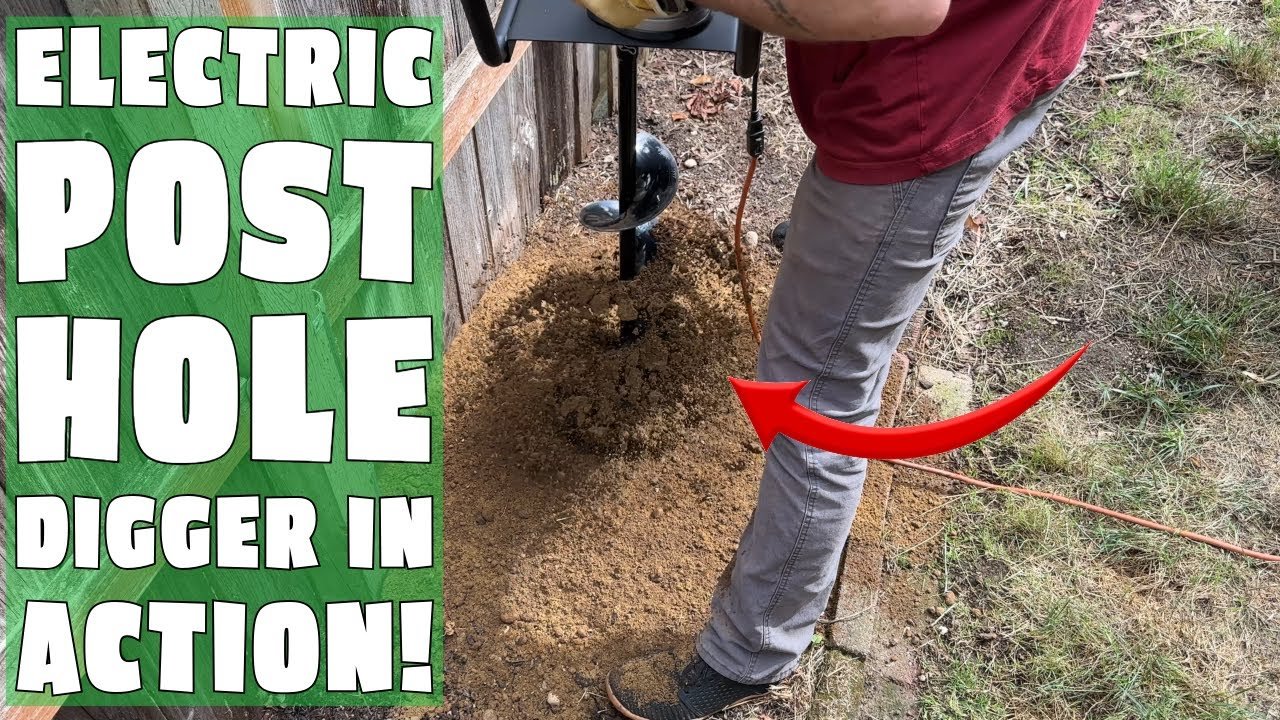
Quick answer: I wish I’d bought this XtremepowerUS 1500W electric post hole digger before I did my other fences. I needed about 15 holes, and it made quick work of the dirt and rocks in my yard. A tree root sometimes stopped the bit, but the time it saved me was worth the price. I’d recommend it for a small fence run where you have power nearby.
Affiliate disclosure: As an Amazon Associate, I earn from qualifying purchases. I may earn a commission if you buy through the link below, at no extra cost to you.
See the XtremepowerUS 1500W electric post hole digger with the 6-inch bit on Amazon
What I tested in my yard
I picked a spot I hadn’t cleared for the demo. There were rocks in the dirt and tree roots in the way. The auger got through the rocky dirt in my yard, but when it hit a tree root, sometimes the bit would stop. Even with those interruptions, it was convenient and made the holes go a lot quicker.
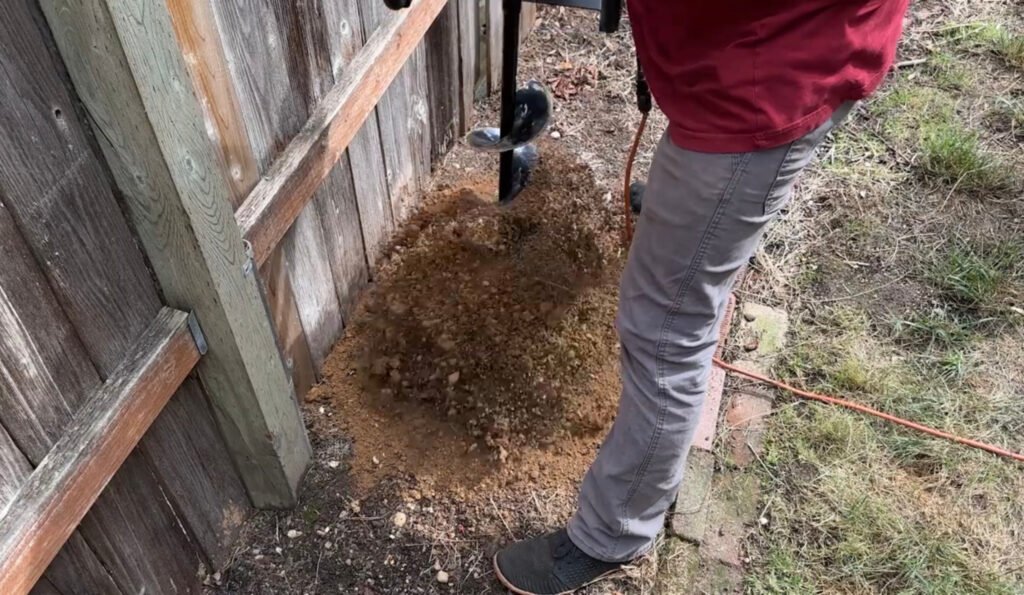
The distinction is worth keeping in mind: it dug through dirt with rocks in it. I wasn’t drilling through solid rock, and I wouldn’t count on the bit to cut through a big root. The clip shows how it handled my yard, not what it can do in every kind of ground.
What the 6-inch bit tells you
The bit in the demo is 6 inches wide and about 31 inches long. The XtremepowerUS listing for model 85060 specifies a 6-inch-wide, 31½-inch-long bit and rates the motor at 1,500 watts with up to 90 foot-pounds of torque. That torque number comes from the manufacturer. What I can say from the demo is that the tool had enough power for the soil I tried it in.
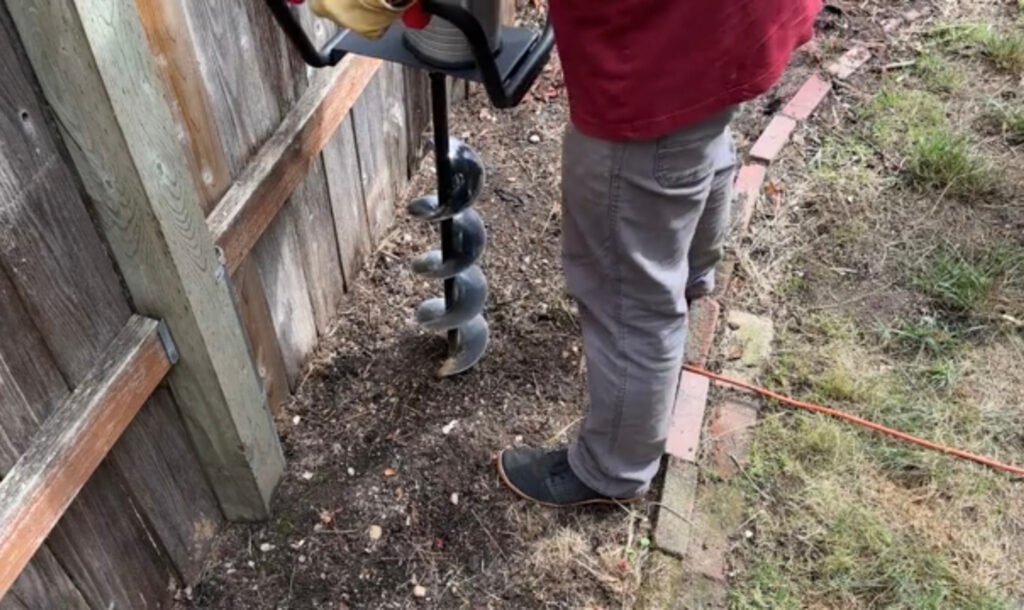
The width of the supplied bit is a better starting point than the wattage when you’re deciding if this kit fits your project. Check the planned hole diameter first, including any clearance your footing or backfill calls for. The bit’s overall length also isn’t a measurement of the depth I reached. If your project calls for a wider or deeper hole, work from those requirements instead of assuming the included bit will do it.
What I’d check before digging
- Underground lines: Contact 811 before you dig and check which private lines will need a separate locate. The Washington Utilities and Transportation Commission’s digging guidance explains both. Follow the instructions that apply at your location.
- Power reach: This model is corded. Check where you’ll plug it in and whether the setup can reach every hole without putting the cord in the work area. Follow the tool manual for outdoor power and cord requirements.
- Obstructions: If the bit catches or stops, don’t force it. Stop, disconnect the power, and follow the manual before clearing a jam. My test doesn’t establish what it will do against a large buried stone or root.
If you’re digging as part of a bigger backyard build, sort out the foundation separately. In my 12×20 enclosed carport guide, I start with the foundation and anchoring plan. My 6×10 greenhouse walkthrough also explains why your anchors need to match the ground or foundation. Those are separate builds with their own requirements.
My takeaway
I haven’t needed the auger again since that job, and I’d still buy it for that fence. It paid for itself in time saved. For a small run with an outlet nearby, I’d pick it over digging the whole run by hand. I’d still check the hole size and power reach first, and have a plan for any roots or large rocks the bit can’t get past.